About Manchester Grief Coach
Someone to walk alongside you
Certified STILL Method grief coach, based in Manchester.
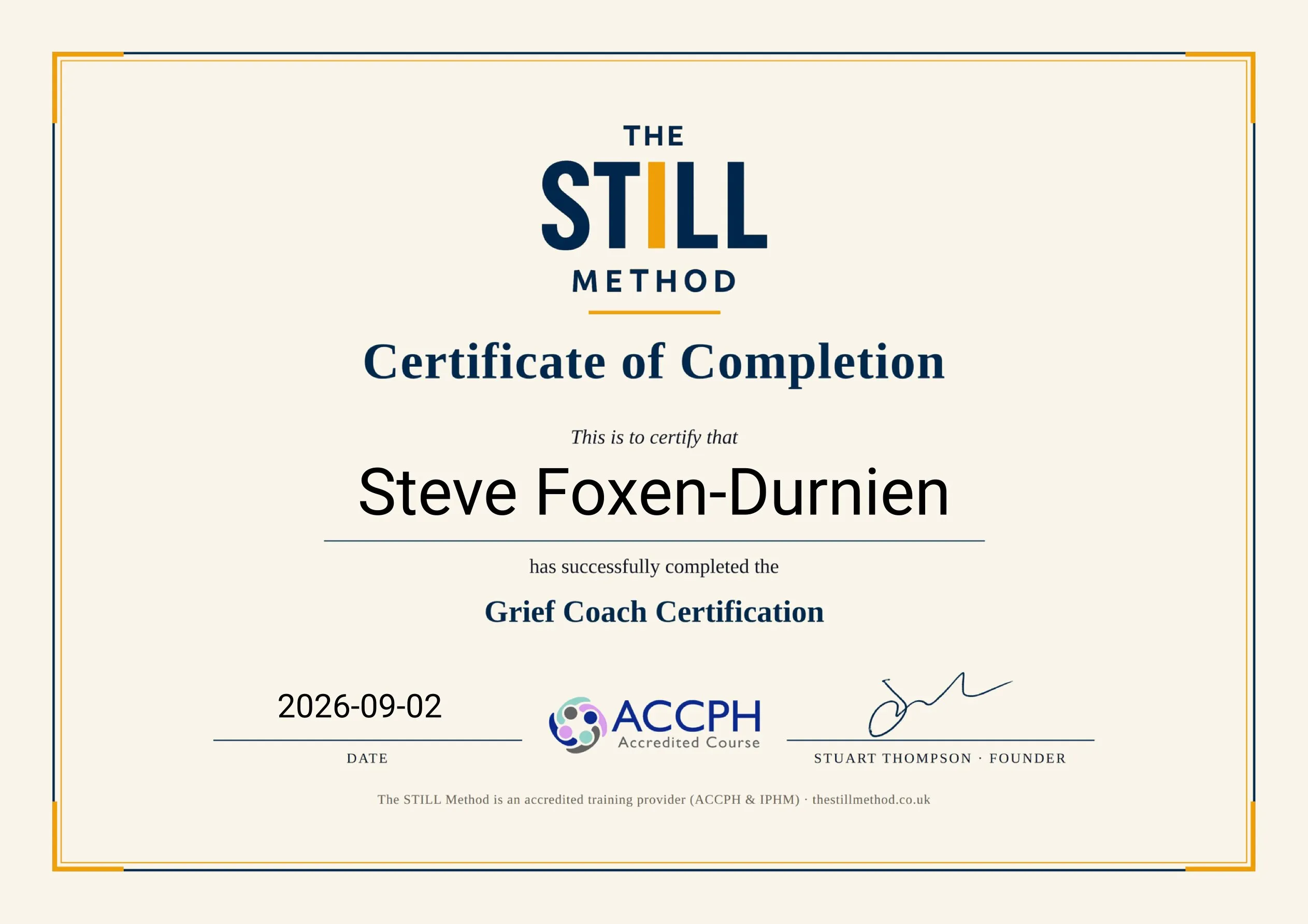
I'm Steve Foxen-Durnien, a certified STILL Method grief coach running a six-week online course for bereaved adults, in a small group or one-to-one. A few years ago I lost several friends in quick succession, and watched other friends lose parents and siblings around the same time. What struck me was how unprepared I was. I wanted to be there for people, but I didn't have the first idea how to talk to someone about a loss like that. That gap is what led me to train as a STILL Method grief coach. I bring structure, a clear plan for each session, and no vague waffle about "the journey." Just a steady, practical space to work through something hard. The course I run, Life After Loss, gives each of its six weeks a clear focus and a practical tool to take away.
New here? Start with grief support in Manchester: what coaching is, and how it differs from counselling.
How I trained
I'm a STILL Method certified Life After Loss Grief Coach, trained on a course accredited by ACCPH and IPHM. It's a trauma-informed approach that looks at grief through the nervous system: grief and anxiety are connected responses in the body, not just something to "process" in the abstract.
In plain terms: I've had proper, accredited training in supporting people through loss safely, including knowing where coaching stops and when to point someone toward something more clinical.
Insurance
I hold professional indemnity and public liability insurance, independently verified by Westminster Global.

Directory listing
I'm a member of Grief Specialists, an independent directory of grief professionals.
The STILL Method
The course is built around five phases. They aren't a checklist to work through in order. They're tools I draw on depending on what someone needs in the moment:
- Stop: pausing an overwhelming moment before it spirals, using grounding and breathing techniques.
- Talk: putting grief into words, in pairs and in the group, at whatever pace suits you.
- Imagine: starting to picture a future that still has room for the person you lost.
- Listen: tuning into where grief actually sits, in the body as well as the mind.
- Learn: noticing what this loss has taught you, and carrying it forward your own way.
It's a structure, not a script. Some weeks lean on one phase more than another. The framework flexes around the group, not the other way round.
What I believe about grief
Grief isn't a problem to fix or a set of stages to tick off. You carry it differently over time, and it doesn't end on a schedule. My job isn't to rush anyone through it or tell them how they should feel. It's to hold a steady structure while people find their own way, together.

What I won't do
I won't diagnose anyone, treat a mental health condition, or replace a therapist or GP. I also work with employers to support bereaved staff. Grief at work